
Introduction
What is the role of AI in lifelong learning?
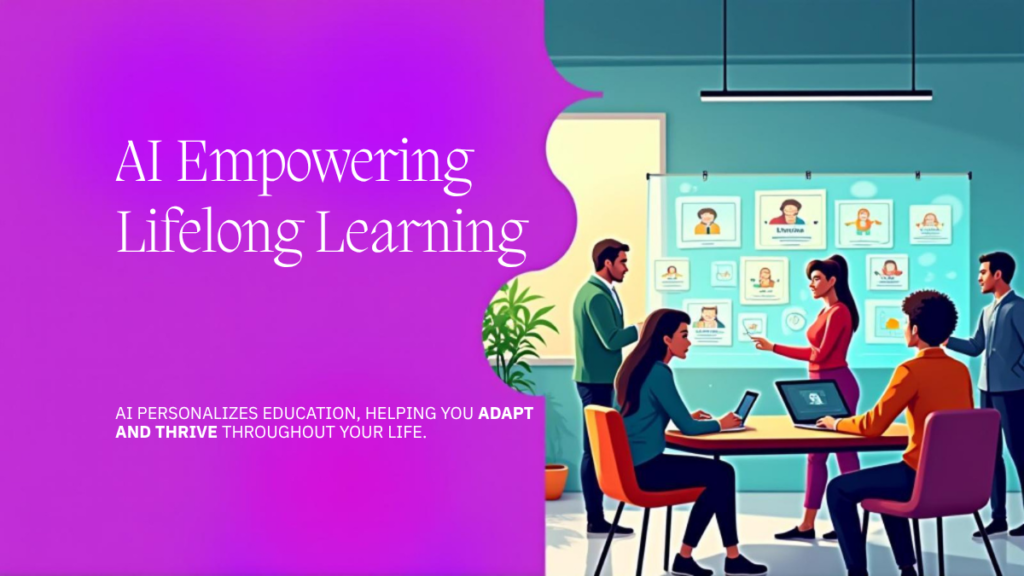
As technology evolves rapidly, the need for continuous education has never been more essential. Lifelong learning the process of ongoing, voluntary, and self-motivated pursuit of knowledge—has become critical for personal development and career success. But how do we keep up? Enter Artificial Intelligence.
In this blog post, you’ll learn how AI is shaping lifelong learning by offering personalized experiences, removing barriers, and enabling smarter educational systems. Whether you’re a student, professional, entrepreneur, or lifelong learner, this guide explains how AI is transforming the way we acquire and apply knowledge throughout life.
How Does AI Support Lifelong Learning?
Short answer: AI enhances lifelong learning by personalizing education, enabling adaptive learning platforms, and expanding access to quality resources.
What is Lifelong Learning?
Lifelong learning refers to the continuous acquisition of knowledge or skills throughout a person’s life. It can take place formally (e.g., university courses), informally (e.g., self-directed online learning), or socially (e.g., workplace training or mentorship).
Key features of lifelong learning:
- Self-directed: Learners choose their goals and methods.
- Accessible anytime: Not confined to age, location, or institution.
- Flexible and evolving: Adapts to personal and professional goals.
Core Concepts: How AI Powers Lifelong Learning
1. Personalized Learning Pathways
AI can tailor learning experiences to individual needs, goals, and skill levels.
AI algorithms analyze user data—such as past performance, behavior, and preferences—to recommend personalized content. Think of it as a GPS for your learning journey, constantly rerouting based on your progress and goals.
Example:
- Duolingo uses AI to customize language lessons based on user proficiency and learning patterns.
- Coursera and Udemy use AI-driven recommendations to guide learners to relevant courses.
2. Adaptive Learning Platforms
Adaptive learning systems change content and assessments in real time, ensuring learners engage with materials that are neither too easy nor too difficult.
Benefits:
- Reduces frustration or boredom
- Accelerates mastery
- Increases engagement and retention
3. Natural Language Processing (NLP)
AI uses NLP to enable intelligent tutoring systems, chatbots, and virtual assistants that provide on-demand explanations and feedback.
Applications:
- AI writing assistants help improve writing skills
- Language learning tools like ChatGPT offer real-time practice
- Virtual mentors provide 24/7 support
4. Predictive Analytics
By analyzing learning behavior and performance data, AI can predict:
- Which students may need additional support
- When a learner is ready to move on
- Future career paths or necessary skills
5. Lifelong Skill Development and Reskilling
AI identifies skills gaps and recommends relevant learning opportunities—vital in industries undergoing digital transformation.
Example:
- LinkedIn Learning suggests courses based on job market trends and user career interests.
- IBM SkillsBuild provides reskilling for emerging technologies like cloud computing and cybersecurity.
Real-World Examples of AI in Lifelong Learning
1. Corporate Training Programs
Companies like Accenture and Amazon use AI to create personalized training plans, improve employee retention, and prepare workers for emerging roles.
2. Education Systems
Universities implement AI to:
- Monitor student progress
- Automate grading
- Provide virtual advisors
- Enable continuous learning through alumni programs
3. Accessibility in Learning
AI tools like speech-to-text, real-time translation, and text summarization break down language and learning barriers for individuals with disabilities or non-native speakers.
Addressing Challenges in AI-Driven Lifelong Learning
1. Data Privacy Concerns
AI systems require large volumes of user data to function effectively. This raises concerns about:
- Data ownership
- Consent
- Security breaches
Solution: Transparent data practices and AI ethics consulting (like Granu AI’s AI Ethics Services).
2. Digital Divide
AI-based learning tools often require internet access and digital literacy, which can leave behind marginalized populations.
Solution: Public-private partnerships to improve tech accessibility and infrastructure.
3. Algorithmic Bias
If not properly trained, AI systems may perpetuate biases in learning recommendations or assessments.
Solution: Use explainable and auditable AI systems. Granu AI’s Explainable AI Toolkit offers guidance for fair model development.
FAQ: Related Questions About AI and Lifelong Learning
How does AI personalize learning?
Short answer: AI uses learner data to customize content and pace.
Longer explanation: AI analyzes behavior, preferences, and performance to adapt learning materials in real time, ensuring content matches each learner’s needs.
Can AI replace human teachers in lifelong learning?
Short answer: No.
Longer explanation: AI enhances learning but doesn’t replace human insight, mentorship, and empathy—especially valuable in guiding and motivating learners.
What are the ethical concerns of using AI in lifelong learning?
Short answer: Data privacy and algorithmic bias.
Longer explanation: AI systems collect sensitive data, and flawed training sets can lead to biased outcomes. Ethical AI practices and transparency are essential.
What skills are most supported by AI-driven platforms?
Short answer: Digital, analytical, and soft skills.
Longer explanation: AI tools assist in developing coding, design, communication, and problem-solving skills by offering hands-on simulations and instant feedback.
How can businesses use AI for employee development?
Short answer: Through AI-based learning management systems.
Longer explanation: Companies can use AI to analyze employee skills, recommend training, and track development aligned with company goals.
How-To: Using AI to Build a Personalized Learning Plan
Here’s a simple process to get started:
- Assess current skills
Use platforms like Coursera, Skillshare, or AI-based career mapping tools. - Set clear goals
Define what you want to achieve and by when. - Use AI platforms
Tools like Duolingo, Khan Academy, and ChatGPT can guide learning. - Track progress
Use AI dashboards or apps with analytics to monitor improvement. - Adjust frequently
Let AI feedback help you refine your learning path continuously.
Conclusion
AI is not just transforming how we work—it’s transforming how we learn, adapt, and grow throughout life. From personalized education to predictive analytics and intelligent virtual mentors, AI empowers individuals and organizations to stay ahead in a rapidly evolving world.
If you’re exploring how to build or apply AI practically, Granu AI offers real-world support and custom solutions to help you navigate lifelong learning with intelligence and innovation.
Internal Links:
- AI Ethics Consulting
- Explainable AI Toolkit
- AI for Business: Customer Service Optimization
- https://granu.ai/how-does-ai-personalize-learning-experiences/