
Introduction
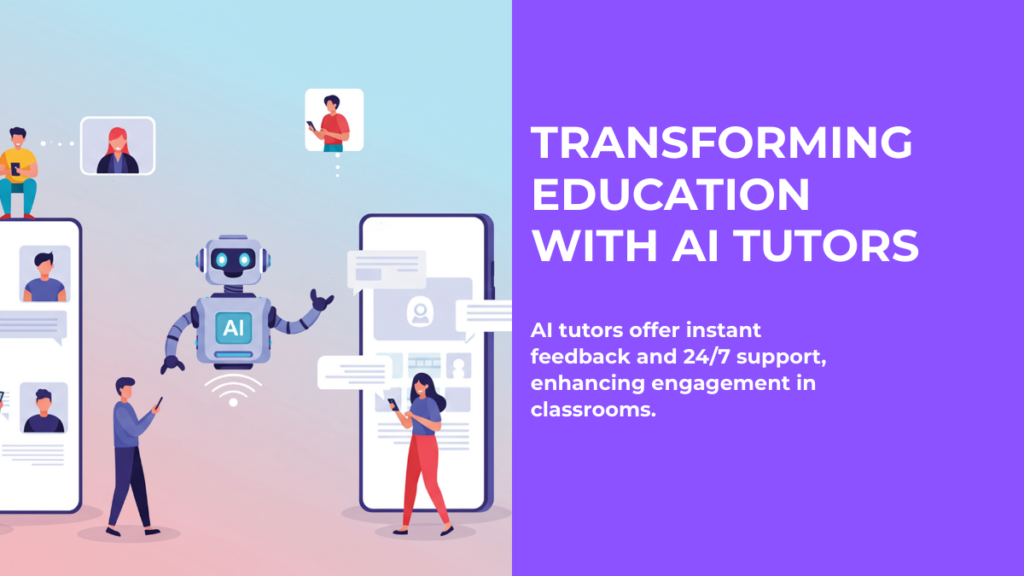
AI is increasingly finding its place in education, especially in the form of tutors. These intelligent systems are designed to support, supplement, and sometimes even lead learning experiences.
In this post, we’ll explore how AI tutors are transforming traditional education, helping both students and teachers with personalized learning paths, real-time feedback, and scalable support. You’ll also gain insights into real-world applications, supporting research, and common questions about integrating AI in classrooms.
What are the benefits of AI tutors in classrooms?
Short answer: AI tutors offer personalized learning, real-time feedback, 24/7 support, and improved student engagement while easing the teacher’s workload.
Personalized Learning at Scale
AI tutors can analyze individual student performance and adapt content in real time to suit each learner’s pace, strengths, and weaknesses. This allows students to receive:
- Customized lesson plans
- Individualized practice problems
- Adaptive difficulty levels
This level of personalization is difficult to achieve in traditional classroom settings, especially with large student-to-teacher ratios.
Real-Time Feedback and Assessment
AI tutors can instantly analyze answers and provide immediate feedback. This means students can:
- Learn from their mistakes right away
- Receive targeted tips for improvement
- Understand concepts better with on-the-spot clarification
For teachers, it offers a powerful tool for tracking performance metrics and spotting trends across the class.
24/7 Learning Support
Unlike human teachers, AI tutors are available around the clock. This is especially useful for:
- Homework help
- Test preparation
- Catching up on missed content
This accessibility ensures that learning doesn’t stop when the school day ends.
Reduced Teacher Workload
AI tutors can handle repetitive and time-consuming tasks like grading quizzes or answering frequently asked questions. This allows teachers to focus more on:
- Facilitating group discussions
- Designing creative lessons
- Supporting emotional and social development
Improved Engagement through Gamification and Interactivity
Modern tutoring platforms often integrate gamified elements, interactive simulations, and adaptive visuals to keep students engaged. Benefits include:
- Increased motivation to learn
- Better retention of material
- A more enjoyable learning experience
Understanding AI Tutors: Core Concepts
What is an AI Tutor?
An AI tutor is an intelligent software system designed to assist or replicate aspects of human teaching. It uses algorithms, machine learning, and sometimes natural language processing to interact with students and deliver personalized education.
How Do AI Tutors Work?
AI tutors typically function by:
- Gathering data: Tracking student interactions and responses.
- Analyzing patterns: Understanding where students excel or struggle.
- Adapting content: Adjusting difficulty, explanations, or presentation style.
- Providing feedback: Giving hints, corrections, and encouragement in real time.
Types of AI Tutors
- Intelligent Tutoring Systems (ITS): Use logic-based approaches to mimic human tutors
- Chatbot Tutors: AI assistants that communicate through text or speech
- Adaptive Learning Platforms: Full-featured systems integrating lessons, quizzes, and analytics
Real-World Examples of AI Tutors in Action
Carnegie Learning’s MATHia
This AI-powered platform helps middle and high school students by adapting math instruction to their specific needs. Studies show improved performance among students using it regularly.
Squirrel AI (China)
This adaptive learning company uses AI to deliver personalized lessons to millions of students, demonstrating measurable gains in test scores and confidence.
Content Technologies, Inc. (CTI)
CTI creates AI-generated textbooks and interactive materials tailored to individual student progress.
Addressing Related Questions
What challenges come with using AI tutors?
Short answer: Cost, data privacy, and over-reliance are common issues.
Longer explanation: While AI tutors offer many benefits, schools must consider the cost of implementation, ensure student data is secure, and maintain a balanced role for human educators to avoid over-dependence on technology.
Can AI replace human teachers?
Short answer: No.
Longer explanation: AI tutors are meant to support, not replace, human teachers. They excel at delivering content and feedback, but lack emotional intelligence, empathy, and classroom management skills.
How do teachers use AI tutors effectively?
Short answer: By integrating them into lesson plans.
Longer explanation: Teachers can use AI to handle foundational instruction or homework support, freeing them to spend more time on complex, interactive, and creative teaching tasks.
Are AI tutors effective for all age groups?
Short answer: Mostly, yes with modifications.
Longer explanation: While AI tutors are highly effective in middle school and beyond, younger children may require simpler interfaces, more human guidance, and tools that align with early childhood education principles.
What subjects work best with AI tutors?
Short answer: Math, science, and language learning.
Longer explanation: These subjects have structured knowledge and clear right/wrong answers, making them ideal for automated, adaptive learning systems.
Optional How-To: How to Integrate AI Tutors into Your Classroom
- Assess needs: Identify where students struggle most
- Choose the right platform: Consider ease of use, features, and cost
- Train staff: Provide onboarding and training sessions
- Start small: Pilot in one subject or class
- Evaluate performance: Use analytics to track impact and refine usage
Conclusion
AI tutors are reshaping classrooms by delivering personalized instruction, boosting student engagement, and giving teachers more time to focus on what matters most—human connection and critical thinking. While they’re not a silver bullet, AI tutors are a powerful addition to the educational toolbox.
Need help exploring how to build or apply AI in real-world learning environments? Granu AI offers practical support and custom solutions.