
Introduction
How is AI reshaping job markets?
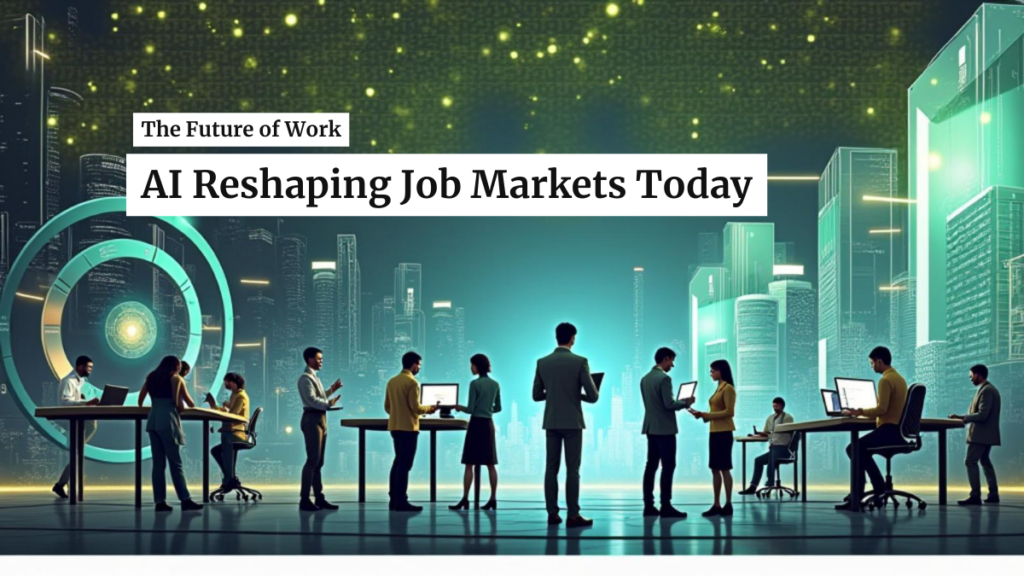
Artificial Intelligence (AI) is rapidly transforming industries, and one of its most profound impacts is on the job market. This article explores how AI is reshaping job markets, affecting both the types of jobs available and the skills required to succeed. Readers will learn about job displacement, job creation, shifting skills demand, and strategies to adapt to the evolving landscape.
How Is AI Reshaping Job Markets?
Short answer: AI is reshaping job markets by automating repetitive tasks, creating new tech-driven roles, and shifting the demand toward human-AI collaboration skills.
AI-driven automation is replacing routine jobs, especially in industries like manufacturing, logistics, and customer service. Simultaneously, it’s creating new opportunities in fields such as AI ethics, data science, and machine learning engineering. Workers are increasingly required to develop skills that complement AI, such as critical thinking, creativity, and emotional intelligence.
Core Concepts: Understanding AI’s Influence on Work
What is AI in the Context of the Job Market?
Artificial Intelligence refers to the simulation of human intelligence by machines, particularly computer systems. These systems can perform tasks such as learning, reasoning, problem-solving, perception, and language understanding. In the workforce, AI technologies include:
- Machine Learning
- Natural Language Processing (NLP)
- Robotic Process Automation (RPA)
- Computer Vision
These tools automate data processing, decision-making, and even creative tasks.
The Evolution of Automation
Automation isn’t new think of the Industrial Revolution. But AI takes it further by enabling machines to make decisions and learn from data. This means more complex roles are now being automated, not just manual labor.
Real-World Impact: Examples of Job Market Transformation
1. Job Displacement
Example: In manufacturing, AI-powered robots are taking over repetitive assembly line tasks, reducing the need for human labor.
Industries affected:
- Transportation and logistics
- Retail (automated checkout, inventory tracking)
- Finance (algorithmic trading, fraud detection)
2. Job Creation
New roles emerging due to AI:
- AI/Machine Learning Engineers
- Data Analysts & Data Scientists
- AI Ethics Consultants
- Prompt Engineers
- AI Trainers and Annotators
Case Study: According to a 2023 McKinsey report, while 800 million jobs may be displaced by automation by 2030, 950 million new roles could be created, especially in tech, healthcare, and renewable energy sectors.
3. Hybrid Roles
Jobs are evolving, blending human soft skills with AI capabilities.
- Marketing professionals now analyze AI-generated consumer data
- Doctors use AI to interpret radiology scans
- Teachers use AI tools for personalized learning paths
Shifting Skill Requirements
What Skills Are in Demand?
Technical Skills:
- Python, SQL, TensorFlow
- Data visualization and analytics
- Cloud computing
Soft Skills:
- Adaptability
- Critical thinking
- Creativity
- Emotional intelligence
Upskilling Tips:
- Enroll in online AI and data science courses
- Attend AI-focused webinars and workshops
- Practice with real-world datasets
The Rise of Lifelong Learning
Professionals can no longer rely on one-time degrees. The AI era demands continuous education and skill renewal. Companies are investing in employee reskilling to stay competitive.
Addressing Concerns: Is AI Replacing or Augmenting Human Jobs?
Short answer: AI is both replacing and augmenting jobs, but it’s also creating new opportunities for those who adapt.
Longer explanation: While AI eliminates some roles, especially routine-based ones, it enhances productivity in many professions. For example, journalists use AI to generate data-driven stories faster, but editorial insight remains irreplaceable.
Ethical & Social Considerations
- Bias in AI systems can lead to unfair hiring practices
- Job access inequality might widen the gap between skilled and unskilled workers
- Mental health impacts due to fear of obsolescence
Governments and companies must ensure AI is applied responsibly, and social safety nets support displaced workers.
FAQs
What industries are most affected by AI?
Short answer: Manufacturing, retail, finance, and healthcare. Longer explanation: These sectors have high volumes of repetitive tasks and are seeing rapid AI integration.
Will AI take all our jobs?
Short answer: No, but it will change most of them. Longer explanation: AI is expected to change job roles more than eliminate them, with a strong focus on human-AI collaboration.
How can workers prepare for AI disruption?
Short answer: Upskill in tech and soft skills. Longer explanation: Embrace lifelong learning, focus on roles that require creativity, empathy, and strategic thinking.
What is the role of governments in AI job shifts?
Short answer: Regulation and workforce support. Longer explanation: Governments can support workers through retraining programs, AI regulation, and social support systems.
What new jobs is AI creating?
Short answer: AI specialists, ethics consultants, prompt engineers. Longer explanation: These roles involve building, maintaining, and ethically governing AI systems.
Conclusion
AI is not just disrupting the job market it’s reshaping it entirely. While some roles are being automated, new and more meaningful opportunities are emerging for those who adapt. The future of work will be driven by those who can collaborate with intelligent systems, not compete against them.
Need help preparing your team for AI transformation? Granu AI offers real-world support and custom solutions to build your AI capabilities confidently.
Internal Links
- AI Ethics Consulting – Granu AI
- Explainable AI: Why It Matters – Blog Post
- Contact Granu AI for Solutions