
Introduction
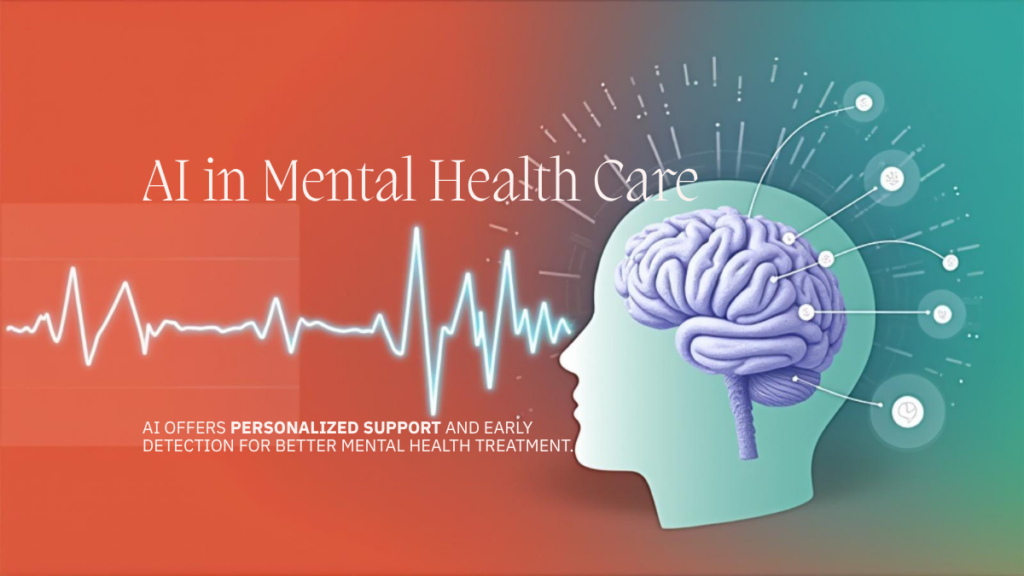
Mental health care is undergoing a digital revolution, and artificial intelligence (AI) is at the center of this transformation.
In this post, you’ll learn how AI is enhancing mental health services by enabling early diagnosis, personalizing therapy, supporting clinicians, and expanding access to underserved communities. Whether you’re a student, entrepreneur, or health professional, this guide explores real-world applications and the future of AI-driven care.
How Does AI Improve Mental Health Treatments?
Short answer: AI improves mental health treatments by enabling early detection of disorders, personalizing therapeutic interventions, supporting clinicians, and increasing accessibility through digital tools.
Let’s explore each of these areas in detail.
Understanding the Role of AI in Mental Health
What Is AI in Mental Health?
AI in mental health refers to the use of machine learning algorithms, natural language processing (NLP), and data analytics to assist in diagnosing, monitoring, and treating psychological conditions.
Think of AI as a digital assistant trained to recognize patterns in behavior, language, or biometric data—providing insights that would take a human practitioner much longer to process.
Core Applications of AI in Mental Health Care
1. Early Detection of Mental Health Disorders
Bolded answer: AI detects signs of mental health issues earlier by analyzing speech, text, and behavioral patterns.
AI tools can analyze social media posts, text messages, and voice tones to identify symptoms of depression, anxiety, PTSD, or even suicidal ideation. For instance, researchers have developed NLP models that detect depressive language with over 85% accuracy.
Example:
- An MIT study showed that AI could identify depression by analyzing how people spoke, even without discussing emotional topics.
2. Personalized Treatment Plans
AI enables therapists and clinicians to create custom treatment paths based on a patient’s unique data profile—such as genetics, behavior, and treatment history.
Key benefits:
- Predicts which therapy might be most effective (e.g., CBT vs. medication)
- Adjusts recommendations in real-time based on patient progress
- Reduces trial-and-error in medication selection
3. AI-Powered Chatbots for Mental Health Support
AI chatbots, like Woebot and Wysa, offer real-time support using evidence-based techniques like CBT (Cognitive Behavioral Therapy).
Why it matters:
- Accessible 24/7
- Offers anonymity and low-cost care
- Scales mental health access globally
Statistic: A 2021 study published in JMIR Mental Health found that 67% of users felt better after interacting with a mental health chatbot over a 4-week period.
4. Clinical Decision Support for Therapists and Psychiatrists
AI tools can assist clinicians by:
- Flagging critical issues (e.g., suicide risk)
- Offering therapy session summaries
- Suggesting diagnosis based on patient history and symptoms
This improves efficiency and ensures critical symptoms are not overlooked.
5. Remote Monitoring Through Wearables
Wearables integrated with AI can monitor sleep, heart rate, physical activity, and even voice modulation. These biomarkers help detect early warning signs of stress, anxiety, or relapse.
Example: Apple Watch and Fitbit data can now be fed into AI apps that monitor mental well-being in real-time.
Advantages of AI in Mental Health
- Scalability: AI makes mental health tools accessible to millions without human bottlenecks.
- Consistency: Unlike humans, AI is never tired or distracted.
- Early Intervention: Catches subtle signs of illness before they escalate.
- Cost-Effective: Reduces the need for high-cost, one-on-one interventions.
Limitations and Ethical Considerations
1. Bias in AI Models
AI tools can be biased if trained on non-diverse datasets, leading to skewed diagnoses or recommendations.
2. Privacy Concerns
Mental health data is highly sensitive. AI applications must comply with HIPAA, GDPR, and other regulations.
3. Over-Reliance
AI should support—not replace—human judgment. Emotional nuance and empathy remain essential in mental health care.
FAQs
What are some AI tools used in mental health today?
Short answer: Woebot, Wysa, Replika, and Ellipsis Health are leading AI mental health tools.
Longer explanation: These tools use conversational AI and NLP to offer therapy-like support and emotional tracking.
Can AI diagnose mental illness?
Short answer: Not officially, but it can help identify symptoms.
Longer explanation: AI is not licensed to diagnose but provides data-driven insights that assist clinicians in making diagnoses.
Is AI mental health support as effective as traditional therapy?
Short answer: It can be a useful supplement, but not a replacement.
Longer explanation: While AI tools are helpful for support and self-care, human therapists offer emotional depth and personalization AI currently lacks.
How does AI help people without access to therapists?
Short answer: AI provides affordable, anonymous, 24/7 support.
Longer explanation: In areas with therapist shortages or stigma, AI apps offer mental health care without social or geographic barriers.
Optional How-To: Getting Started with AI Mental Health Tools
If you’re interested in exploring AI for your own mental health or for your organization:
- Choose a tool: Start with free tools like Woebot or Wysa.
- Set boundaries: Use them as supplements, not replacements for therapy.
- Monitor impact: Track changes in mood or anxiety levels over time.
- Consult a professional: Use AI insights in discussions with a licensed therapist.
Conclusion
AI is not here to replace therapists but to enhance and extend the reach of mental health care. From early diagnosis to personalized treatment and 24/7 chatbot support, AI is redefining how we approach mental wellness.
If you’re exploring how to build or apply AI practically, Granu AI offers real-world support and custom solutions tailored to your needs.