
Introduction
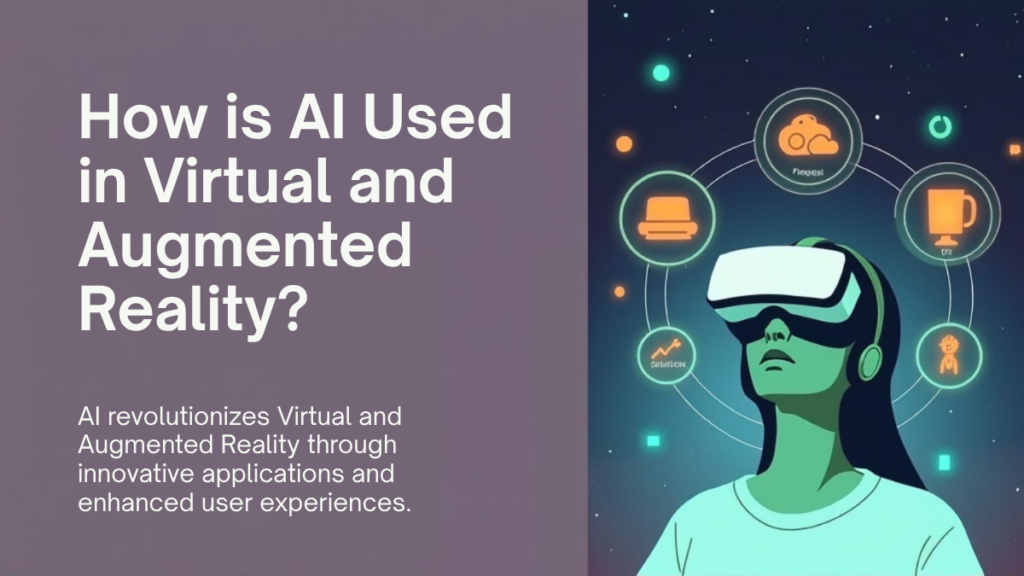
How is AI used in virtual and augmented reality?
This is a growing question as industries worldwide combine artificial intelligence (AI) with virtual reality (VR) and augmented reality (AR) to build smarter, more responsive, and personalized experiences.
In this blog, you’ll explore how AI is integrated into VR and AR technologies, what core concepts drive this integration, real-world applications across industries, and frequently asked questions that help clarify this emerging synergy. Whether you’re a tech enthusiast, developer, business leader, or student, this guide breaks down the transformative relationship between AI, VR, and AR.
How Is AI Used in Virtual and Augmented Reality?
AI is used in VR and AR to enable real-time decision-making, user personalization, object recognition, voice interaction, and predictive behavior modeling. These capabilities improve the realism, interactivity, and efficiency of immersive environments.
Let’s explore how this happens in practice.
Understanding the Core Concepts
What Is Virtual and Augmented Reality?
- Virtual Reality (VR): A fully immersive experience where users enter a simulated digital environment using headsets (like Meta Quest or HTC Vive).
- Augmented Reality (AR): Enhances the real world by overlaying digital information using devices like smartphones, tablets, or AR glasses (e.g., Microsoft HoloLens).
What Role Does AI Play?
AI acts as the “intelligent brain” behind these immersive systems. It enables environments to:
- Learn from user actions
- Adapt in real time
- Predict needs or outcomes
- Recognize patterns, faces, gestures, or speech
Without AI, VR and AR would remain static, pre-programmed experiences with limited responsiveness.
Key AI Applications in VR and AR
1. Natural Language Processing (NLP)
AI-powered NLP allows users to interact with VR/AR systems through voice commands. For example:
- In VR training simulations, users can ask questions or request guidance.
- AR glasses can interpret and respond to spoken queries in real time.
Example: Google Lens uses NLP and computer vision to identify and describe objects users point their camera at.
2. Computer Vision
AI enables devices to understand and interpret visual inputs:
- Facial and gesture recognition
- Object tracking
- Scene mapping in AR (e.g., understanding room dimensions or furniture layouts)
Example: IKEA’s AR app uses AI and AR to visualize furniture in your home and recommend designs based on room structure.
3. User Personalization
AI collects user behavior data in VR/AR apps and personalizes the experience:
- Tailoring content based on preferences
- Recommending new environments or features
- Adjusting difficulty in VR-based games or training modules
Example: AI in fitness VR apps adjusts workout difficulty based on heart rate and performance metrics.
4. Predictive Analytics & Simulation
AI models predict future actions or simulate possible outcomes. This is especially useful in:
- VR surgery simulations for doctors
- AR-based maintenance tools that predict equipment failures
Example: Boeing uses AR powered by AI to guide technicians through aircraft maintenance tasks with predictive alerts.
5. Emotion & Sentiment Detection
Some VR/AR systems integrate emotion AI to read user expressions and respond accordingly, enhancing realism and empathy in simulations.
Example: Emotional AI in VR therapy platforms adjusts scenarios based on patient reactions to stress or fear triggers.
Real-World Applications of AI in VR and AR
Gaming and Entertainment
- Smarter NPCs (non-player characters) that learn from player behavior
- Voice-based commands for immersive control
- Personalized storylines and quests
Case Study: Half-Life: Alyx uses AI to enhance enemy responses, adapting to player strategies.
Healthcare and Therapy
- VR therapy for PTSD, phobias, and anxiety
- AR surgery guidance and diagnostics
- AI-assisted rehabilitation environments
Case Study: Osso VR combines AI and VR for surgical training, reducing error rates in real-world procedures.
Architecture and Construction
- AI-enhanced AR visualizations of blueprints
- Real-time design modifications
- Predictive hazard warnings during walkthroughs
Education and Training
- Adaptive learning paths in VR classrooms
- AI tutors responding to student input
- Real-time performance analysis and feedback
Case Study: Labster uses AI-powered VR labs to teach science concepts, improving retention and engagement.
Retail and E-Commerce
- AR mirrors using AI to show how clothing fits
- AI-driven recommendations based on browsing behavior
- Personalized virtual shopping assistants
Case Study: Sephora’s AR app offers real-time AI makeup try-ons based on facial recognition and style history.
Benefits of Combining AI with VR/AR
- Hyper-personalized experiences
- Real-time interaction and decision-making
- Automation of routine or repetitive tasks
- Improved accessibility for disabled users
- Cost-effective training and simulation tools
Frequently Asked Questions (FAQ)
Q1: What makes AI essential in VR/AR applications?
Short answer: AI makes VR/AR adaptive and responsive.
Longer explanation: Without AI, VR and AR would rely on static programming. AI allows these systems to understand, learn, and respond to user behavior, making experiences more interactive and useful.
Q2: Is AI necessary for all VR/AR applications?
Short answer: No, but it enhances them significantly.
Longer explanation: While simple VR/AR applications can function without AI, integrating AI increases realism, interactivity, and scalability—especially in fields like healthcare, gaming, and education.
Q3: Can AI in AR/VR invade privacy?
Short answer: Yes, if not managed responsibly.
Longer explanation: AI-powered AR/VR systems collect data such as facial expressions, voice inputs, and behavior patterns. Without strict data governance, this poses risks. Responsible design and ethical AI principles are critical.
Q4: How will AI shape the future of immersive technologies?
Short answer: AI will make VR and AR smarter, faster, and more human-like.
Longer explanation: Expect immersive environments that can understand your mood, respond to your commands, and even anticipate your needs—creating experiences that are both intelligent and emotionally responsive.
Q5: What are the challenges in integrating AI into AR/VR?
Short answer: Technical complexity and data privacy.
Longer explanation: Combining AI with VR/AR demands significant processing power, advanced sensors, and massive data. Balancing performance with ethical concerns (e.g., surveillance, data misuse) is a growing challenge.
Optional How-To Section
How to Begin Using AI in Your VR/AR Project
- Define Your Use Case – Is it for training, gaming, or retail?
- Choose the Right AI Tools – Use platforms like Unity with AI SDKs or TensorFlow for integration.
- Gather Training Data – For personalization or object recognition, you’ll need diverse, labeled data.
- Prototype in a Low-Risk Environment – Test with closed user groups.
- Ensure Compliance – Align with data privacy laws (GDPR, HIPAA, etc.).
Conclusion
AI is transforming the capabilities of virtual and augmented reality, turning them into intelligent, adaptive tools across industries. From personalized gaming to life-saving surgical simulations, the blend of AI with immersive tech is unlocking new levels of functionality, accessibility, and creativity.
If you’re exploring how to build or apply AI practically, Granu AI offers real-world support and custom solutions tailored to your business goals.
Further Reading and Resources
Internal Links:
- Granu AI Services
- AI Ethics Consulting
- Blog: Explainable AI
- https://granu.ai/what-are-the-risks-associated-with-agi/
External Links: