
Introduction
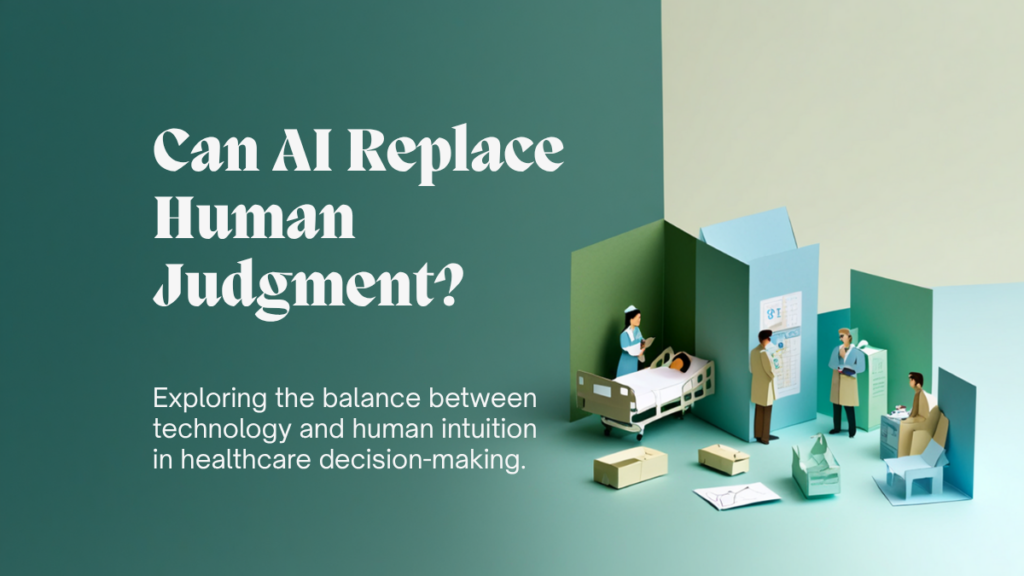
Can artificial intelligence (AI) take over the life-or-death decisions made in hospital intensive care units?
Can AI Replace Human Judgement in Critical Care?
This question is no longer speculative it’s urgent. As healthcare systems become increasingly digitized, AI-powered systems are being tested in critical care environments to assist or even substitute human decision-making.
In this blog, you’ll learn:
- Whether AI can realistically replace human judgment in critical care
- What AI currently does in ICUs and emergency medicine
- The risks, ethical considerations, and limitations of relying on AI
- The future balance between AI support and human expertise in healthcare
Can AI Replace Human Judgment in Critical Care?
Short answer: Not entirely AI can augment, but not fully replace, human judgment in critical care due to ethical complexity, unpredictable variables, and the need for empathy.
While AI has proven effective at analyzing data and spotting patterns faster than humans, the nuances of critical care—like balancing patient values, interpreting emotional cues, and making context-sensitive decisions still require human oversight.
What Is Critical Care?
Critical care, also known as intensive care, involves treating patients with life-threatening conditions requiring constant monitoring and intervention. This can include:
- Severe infections or sepsis
- Multi-organ failure
- Post-operative complications
- Acute respiratory distress (e.g., COVID-19 cases)
Care in these settings involves complex decisions, rapid risk assessments, and ethical judgment, often with incomplete or conflicting data.
How Is AI Currently Used in Critical Care?
AI is already supporting clinical teams in the following areas:
1. Predictive Analytics
AI algorithms analyze patient data to forecast:
- Deterioration risk
- Sepsis onset
- Cardiac arrest likelihood
- ICU readmission probability
Example: The Epic Sepsis Model is used in many U.S. hospitals to alert staff when a patient might develop sepsis based on EHR data.
2. Clinical Decision Support Systems (CDSS)
AI-enhanced CDSS tools recommend:
- Drug dosages
- Ventilator settings
- Treatment plans based on clinical guidelines
3. Medical Imaging
AI detects anomalies in CT scans or X-rays—useful for spotting brain hemorrhages, lung collapse, or fractures in real-time.
4. Workflow Optimization
AI automates charting, triage, and resource allocation, allowing clinicians to focus on patient care.
Where AI Falls Short: The Limits of Machine Judgment
Despite its capabilities, AI has fundamental limitations in critical care:
1. Lack of Contextual Awareness
AI struggles with context. A model may suggest withdrawing life support based on vitals, but it won’t understand that the patient is a young parent whose family wants every effort made.
2. Ethical Complexity
Critical care often involves moral gray areas:
- Who gets the last ventilator?
- When is continued care futile?
- Should quality of life be factored in?
AI lacks ethical reasoning, compassion, and the capacity to weigh human values.
3. Bias in Data
AI systems trained on historical data can perpetuate racial, gender, and socioeconomic biases. This is particularly dangerous in high-stakes situations where fairness is essential.
Statistic: A study in Science (Obermeyer et al., 2019) found that an AI used to allocate healthcare resources was less likely to refer Black patients for additional care—even when they were equally or more sick than white patients.
4. Transparency Issues
Many AI models are “black boxes”—their internal decision-making isn’t understandable by humans. This makes it hard to trust their recommendations blindly.
Case Study: AI in the ICU During COVID-19
During the pandemic, some hospitals used AI to triage COVID-19 patients and prioritize care. In a few instances:
- AI tools helped allocate limited resources like ventilators
- Remote monitoring systems flagged patient decline
- Predictive models estimated ICU stay length
Outcome: These systems improved efficiency but required constant human oversight to prevent misjudgments—especially in diverse patient populations with comorbidities.
Can AI Ever Be Empathetic?
Short answer: No, not in a human sense.
Empathy involves emotional intelligence, ethical reflection, and cultural sensitivity. While AI can simulate empathy with polite language or voice tones, it cannot truly understand suffering or offer moral comfort.
This makes AI an insufficient substitute in situations like:
- Breaking bad news to families
- Deciding end-of-life care based on a patient’s beliefs
- Responding to panic or fear in patients
Balancing AI and Human Expertise
Rather than replacing doctors, AI is best seen as a co-pilot in critical care.
The ideal balance:
- AI handles data-heavy tasks: risk prediction, diagnostics, optimization
- Humans lead in judgment-heavy decisions: ethics, emotions, unexpected scenarios
The synergy between machine efficiency and human empathy can enhance patient outcomes—without losing the human touch.
FAQs
Can AI diagnose patients in the ICU?
Short answer: Partially
Longer explanation: AI can assist with diagnoses by analyzing data or images but still requires a doctor’s interpretation and approval.
Is AI more accurate than doctors?
Short answer: In some tasks, yes.
Longer explanation: AI outperforms humans in narrow domains like image recognition, but lacks broader clinical reasoning and ethical judgment.
Will AI take over ICU jobs?
Short answer: Unlikely
Longer explanation: AI may reduce workload by automating routine tasks, but ICU staff will remain essential for human care and complex decisions.
Is AI safe to use in critical care?
Short answer: It depends.
Longer explanation: AI can be safe with proper validation, oversight, and ethical guidelines—but risks exist if used blindly.
How do hospitals ensure AI fairness?
Short answer: Through audits and diverse training data.
Longer explanation: Developers and hospitals must monitor AI systems for bias, explainability, and outcomes across populations.
Conclusion
AI is transforming critical care but it isn’t replacing human judgment any time soon.
Machines are exceptional at crunching numbers and spotting early warning signs. But they lack the moral reasoning, empathy, and holistic insight needed to navigate life-or-death situations.
The future lies in collaboration, where AI augments human expertise—freeing up clinicians to do what only they can: make compassionate, ethical decisions.
Need help designing AI that supports, not replaces, your healthcare team?
Granu AI specializes in building responsible, real-world AI systems tailored to your needs. Contact us or explore our AI Ethics Consulting services today.
Internal Links
- AI Ethics Consulting at Granu AI
- How Explainable AI Improves Trust in Healthcare
- https://granu.ai/what-are-the-risks-of-relying-on-ai-for-medical-diagnoses/
- Contact Granu AI