
Introduction
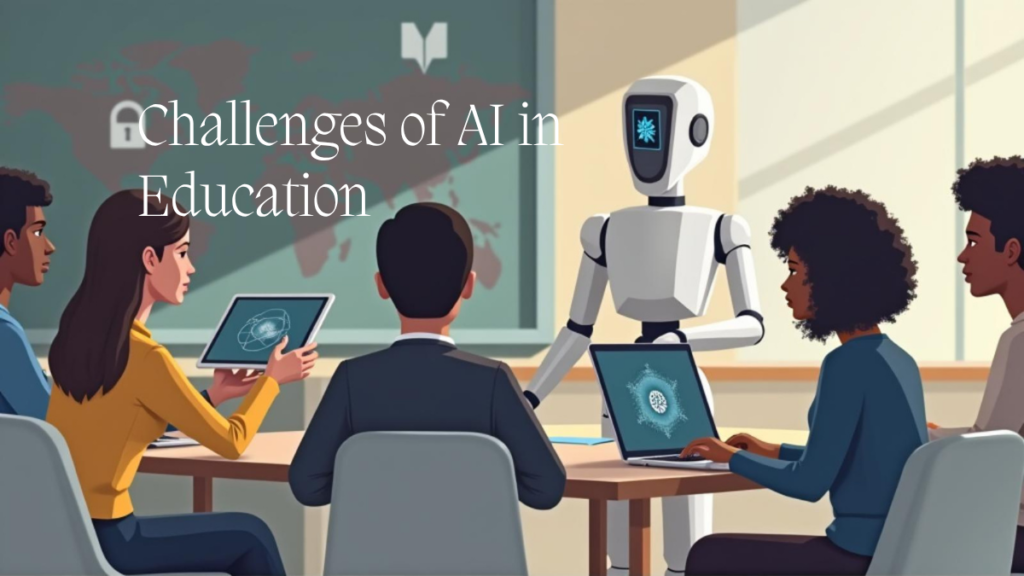
What Are the Challenges of Implementing AI in Education?
Artificial Intelligence (AI) is rapidly transforming industries, and education is no exception. But while the potential is enormous—from personalized learning to automated grading—there are significant challenges that must be addressed before AI can be fully integrated into classrooms and institutions.
In this article, you’ll learn:
- The main obstacles to using AI in education
- How these challenges impact educators, students, and administrators
- Real-world examples and expert insights
- FAQs addressing related concerns
Whether you’re an educator, student, policymaker, or entrepreneur, this guide will help you understand what’s holding back AI in education and how to move forward effectively.
What Are the Main Challenges of Implementing AI in Education?
Short Answer:
The main challenges include data privacy concerns, lack of infrastructure, algorithmic bias, insufficient training for educators, and high implementation costs.
Let’s dive deeper into each of these.
1. Data Privacy and Security Concerns
Bolded short answer: AI systems require access to vast amounts of student data, raising privacy and security issues.
Why It Matters
AI-powered education tools often rely on data like test scores, behavioral patterns, and even emotional responses to personalize learning. This makes student data a critical asset—and a major liability if not properly protected.
Risks Involved
- Unauthorized access or breaches
- Misuse of student information
- Compliance issues with laws like FERPA, GDPR
Real-World Example
In 2020, a data breach in a major U.S. school district exposed thousands of students’ personal information due to vulnerabilities in an AI-based learning platform.
2. Limited Access to Technology Infrastructure
Bolded short answer: Not all educational institutions have the infrastructure needed to deploy AI systems.
Key Limitations
- Lack of high-speed internet in rural areas
- Outdated hardware in schools
- High upfront cost of AI platforms
Equity Issues
This tech divide can exacerbate existing educational inequalities, leaving underfunded schools further behind.
Stat to Know
According to UNESCO, over 30% of students globally lack access to basic digital learning tools needed to benefit from AI.
3. Algorithmic Bias and Fairness Issues
Bolded short answer: AI models can inherit or amplify biases present in their training data.
How It Happens
If an AI model is trained on data that lacks diversity, it may deliver skewed results—such as favoring certain learning styles or cultural backgrounds.
Consequences
- Unfair grading
- Inaccurate student assessments
- Lower trust in AI-driven tools
Infographic: Types of AI Bias in Education
- Data Bias: Lack of diversity in training data
- Label Bias: Inaccurate tagging of learning outcomes
- Outcome Bias: Over-reliance on test scores
4. Lack of Educator Training and Digital Literacy
Bolded short answer: Teachers often lack the skills and confidence to integrate AI tools effectively.
Why It’s a Problem
AI tools are only as effective as their users. Without proper training, teachers may:
- Underutilize AI features
- Misinterpret data insights
- Resist new technologies due to fear or uncertainty
Suggested Solutions
- Continuous professional development
- Partnerships with AI education providers
- Curriculum integration of AI literacy
5. High Costs of AI Implementation
Bolded short answer: Developing, purchasing, and maintaining AI systems is expensive.
Cost Factors
- Licensing fees for software
- Hardware upgrades
- Ongoing tech support
- Training and onboarding
Workaround Options
- Open-source AI tools
- Grants and public funding
- Scalable cloud-based platforms
6. Ethical and Accountability Challenges
Bolded short answer: AI decisions in education raise ethical questions around responsibility and transparency.
Ethical Dilemmas
- Who is accountable if an AI system misguides a student?
- Should students know they’re being evaluated by AI?
- Is it ethical to automate emotional or behavioral assessments?
Call for Action
AI governance frameworks and transparency reports should become standard in educational deployments.
FAQ: Related Questions About AI in Education
What is the role of AI in modern education?
Short answer: AI enhances learning through personalization, automation, and data analysis.
Longer explanation: From adaptive learning platforms to AI tutors, these tools help tailor content to individual students’ needs, making education more efficient and accessible.
How can schools ensure ethical AI use?
Short answer: By following transparent practices and involving stakeholders.
Longer explanation: Schools should implement AI responsibly by using explainable algorithms, consulting ethical frameworks, and ensuring human oversight in AI decisions.
Can AI replace teachers?
Short answer: No.
Longer explanation: AI can assist but not replace teachers. It supports by automating repetitive tasks and offering personalized content, but the human element of teaching remains irreplaceable.
Is AI in education effective?
Short answer: Yes, when implemented correctly.
Longer explanation: Studies show AI can improve student engagement, learning outcomes, and teacher productivity—but effectiveness varies based on how it’s deployed and supported.
What types of AI tools are used in education?
Short answer: Adaptive learning systems, chatbots, grading assistants, and predictive analytics.
Longer explanation: These tools help automate administrative work, offer on-demand support, and personalize education plans based on student behavior and performance.
How to Begin Overcoming These Challenges
While these hurdles are significant, they’re not insurmountable. Here’s a simplified roadmap:
Step 1: Start Small
Pilot AI tools in limited settings before scaling.
Step 2: Build Infrastructure
Invest in foundational technology like high-speed internet and cloud services.
Step 3: Prioritize Training
Offer workshops and certification programs for educators.
Step 4: Collaborate
Partner with AI solution providers and policymakers to create ethical, scalable frameworks.
Conclusion
AI has the power to revolutionize education—but only if its implementation is thoughtful, inclusive, and well-supported. Addressing the challenges of privacy, bias, access, and ethics is essential for successful integration.
If you’re exploring how to build or apply AI practically, Granu AI offers real-world support and custom solutions.
Internal Links
- AI Ethics Consulting – Granu AI
- Explainable AI: Why It Matters in Education – Blog
- Contact Granu AI for Education Solutions
- https://granu.ai/how-can-education-systems-adapt-to-an-ai-driven-future/